

A domestic sewage pumping station can be required when the natural fall between a property and its intended foul drainage connection is insufficient. Instead of relying on gravity throughout the complete route, wastewater is collected within a chamber and transferred onwards using a sewage pump.
The chamber provides temporary storage while automatic controls monitor the wastewater level. Once the programmed start level is reached, the pump operates and sends the contents through the rising main towards the final connection.
Properties throughout Lincolnshire can have very different drainage requirements depending on site levels, property layout, development type, distance to the available sewer and the route available for the discharge pipework.
Pumping Solutions can assess the proposed drainage arrangement and pumping duty before recommending equipment for the application. Our domestic work includes new installations as well as pump replacement, repairs, controls and servicing for existing sewage pumping stations.


A sewage pumping station needs to be considered as a complete drainage system rather than simply a pump and chamber. The incoming wastewater demand and the conditions on the discharge side both influence the equipment required.
The length of the rising main, vertical lift, pipe diameter, valves and fittings can all affect the pump duty. Chamber storage and control levels also influence how often the pump starts and how long each cycle lasts.
For a domestic installation, Pumping Solutions can consider these factors together so the pump, chamber, controls and discharge arrangement are suited to the property’s intended use.
- Expected household occupancy
- Incoming wastewater volume
- Peak wastewater flow
- Length of the rising main
- Required vertical lift
- Pipe diameter and route
- Available chamber storage
- Required pumping flow
- System head and resistance
- Single or twin-pump arrangement
- Electrical and control requirements
- High-level alarm provision

Gravity drainage relies on a suitable fall between the property and the receiving sewer or discharge point. Where the required fall cannot be achieved, a pumping station provides the mechanical lift needed to transfer foul wastewater.
The station uses an underground chamber to collect incoming wastewater. Automatic level controls monitor the chamber and operate the sewage pump when the programmed start level is reached.
The pump then transfers the wastewater through a rising main towards the designated connection before stopping when the normal lower level has been restored.
The need for pumped foul drainage depends on the individual site’s levels, sewer position and proposed drainage route. A pumping station can provide the required connection where gravity alone cannot achieve it.


Lincolnshire includes established towns, newer residential developments, villages and properties in more rural settings. Domestic drainage arrangements can therefore vary significantly from one property to another.
The position and level of the receiving sewer are particularly important when planning foul drainage. The distance between a property and the available connection, together with the levels along the proposed pipe route, can determine whether gravity drainage is practical.
Pumping Solutions operate from Pinchbeck near Spalding and provide domestic sewage pumping station support across Lincolnshire, including new installations, pump replacement, repairs, controls and maintenance of existing systems.
Rather than selecting equipment solely from the property address or an existing pump model, we consider the actual pumping duty, including wastewater demand, discharge distance, vertical lift and the proposed rising-main arrangement.
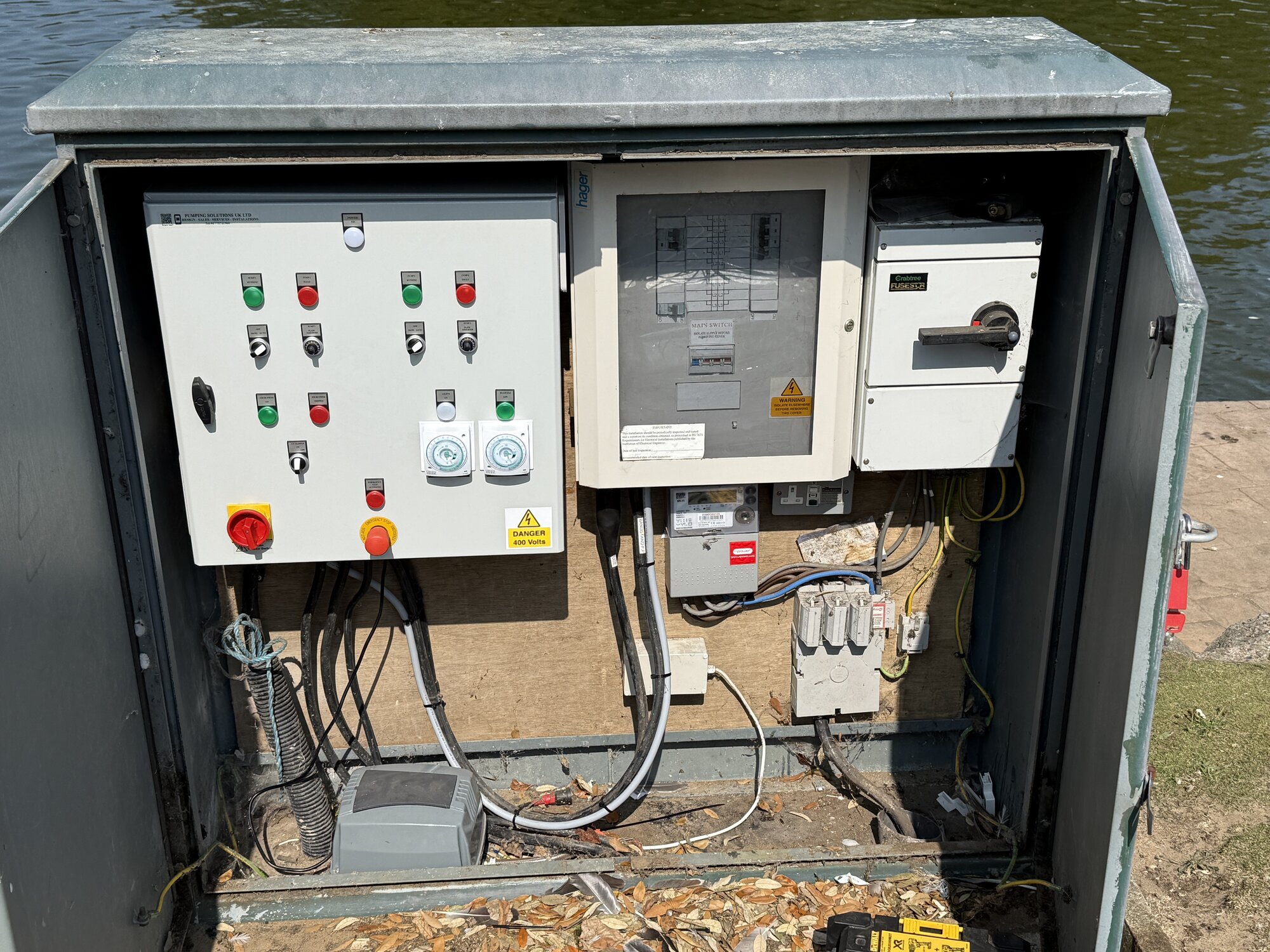


A domestic pumping station can operate automatically for long periods, often without the homeowner needing to think about it. Because a property may depend entirely on the station for foul drainage, regular maintenance can help identify developing problems before the system stops working.
During servicing, the operation of the pump and controls can be checked, while accessible components such as valves, floats and associated equipment can be assessed for signs of wear or abnormal operation.
Maintenance can also highlight changes in pump performance, unusual cycling or control issues that may otherwise only become obvious when a high-level alarm is triggered.
The appropriate servicing frequency depends on the particular installation, its usage and the equipment fitted, but planned attention can provide an opportunity to address wear before it becomes an unexpected drainage problem.
An existing sewage pumping station does not necessarily need complete replacement when a single component fails. The condition of the wider installation should be established before deciding what work is required.
A failed sewage pump, float switch, valve or control component may be replaceable while the chamber and remaining equipment continue to be suitable for service.
A wider replacement may be appropriate where the station has deteriorated, parts are no longer readily available, faults are recurring or the original system no longer reflects the property’s current requirements.
Where an upgrade is being considered, reviewing the actual pumping duty can also help determine whether the replacement equipment should simply replicate the existing arrangement or provide a revised solution.
Domestic sewage pumping stations combine mechanical equipment, electrical controls, level management and discharge pipework. Reliable operation depends on those elements working together correctly.
Pumping Solutions can assess the wider system when investigating faults, rather than automatically treating the most obvious failed component as the only cause of the problem.
Our domestic services cover new pumping station installations, sewage pump replacement, control and alarm issues, repairs, upgrades and planned maintenance.
Operating from Pinchbeck near Spalding, Pumping Solutions provide domestic sewage pumping support throughout Lincolnshire and the surrounding region.
What is a domestic sewage pumping station?
A domestic sewage pumping station is a system used to collect and mechanically transfer wastewater where it cannot be discharged through gravity drainage alone. Wastewater collects within a chamber until the pump activates and transfers it towards the required discharge point.
Why might my Lincolnshire property need a sewage pumping station?
A pumping station may be required where the property is positioned below the available drainage connection or where the site does not provide sufficient fall for conventional gravity drainage.
Do you install new sewage pumping stations in Lincolnshire?
Yes. Pumping Solutions provide domestic sewage pumping station installation services across Lincolnshire, with equipment selected around the property’s wastewater demand, drainage levels and proposed discharge arrangement.
Can you replace just the sewage pump?
In suitable installations, yes. If the existing chamber and associated equipment remain suitable, replacing the pump may be possible without replacing the complete pumping station.
What should I do if my high-level alarm is sounding?
A high-level alarm indicates that wastewater has reached a level above the normal operating range. The system should be investigated to determine why the chamber is not being emptied correctly. Possible causes include pump failure, restricted discharge, loss of power or a problem with the level controls.
Do you repair sewage pumping stations in Lincolnshire?
Yes. Pumping Solutions provide sewage pumping station repair, fault finding, servicing and maintenance from their base in Pinchbeck near Spalding, supporting domestic pumping installations throughout Lincolnshire and surrounding areas.
Can an old pumping station be upgraded?
Depending on the condition of the installation, it may be possible to repair or upgrade individual components. In other cases, replacing the complete pumping station may be more appropriate.
Do you provide pump maintenance?
Yes. Pumping Solutions provide preventative and reactive pump maintenance and servicing to help maintain system performance and identify potential problems before they develop into more disruptive failures.
Can you specify a pumping station for a new house?
Yes. For a new property, factors including expected wastewater demand, chamber capacity, pumping distance, vertical lift, rising-main arrangement and intended connection can be considered when specifying the pumping station.
What should I avoid putting through a sewage pumping station?
Avoid flushing wipes, nappies, sanitary products, cloths and other materials that do not readily break down. These items can become caught in sewage pumps or pipework and increase the risk of blockages.